
Research and ideas for Responsible AI
Reports, research and media from AI 2030 and our global network of fellows, councils and partners.
Research from the AI 2030 network
Frameworks, roundtable findings and future scenarios to help leaders put Responsible AI to work.
Ideas from the AI 2030 team

The Next Bullwhip Effect: What Happens When the Customer Has an AI Agent?
AI 2030 Head of Strategy Anastasia Raissis looks at what changes when AI agents shop on a customer's behalf. Millions of agents reacting to the same prices and delivery times could make demand steadier, or make it swing faster than ever.
Read more → (opens in a new tab)
The Automation Blindspot: How AI Reshapes Reality Through Data
AI 2030 Head of Strategy Anastasia Raissis and advisor Howard Waterman show how AI now shapes the information leaders see before they decide. They argue organizations must govern their data and information flows as closely as their decisions.
Read more → (opens in a new tab)
Chicago’s AI Identity: Where AI Moves From Frontier Labs to the Real Economy
Xiaochen Zhang argues that AI is moving from frontier labs and demos into deployment across whole industries. In this harder phase, he writes, Chicago is becoming the city where AI meets the real economy.
Read more → (opens in a new tab)
What Happens to the Bullwhip Effect When the Customer Is an AI Agent?
Supply chains assume people create demand. Anastasia Raissis asks what happens when AI agents compare, negotiate and buy for us, and whether their combined reactions could create demand signals no person actually sent.
Read more → (opens in a new tab)
Can Openness Scale Fast Enough To Keep AI From Becoming A Closed Infrastructure Economy?
Starting from Anthropic's Project Glasswing, Xiaochen Zhang looks at the paradox now shaping AI infrastructure. Openness matters more than ever, yet the most advanced capabilities are increasingly kept closed.
Read more → (opens in a new tab)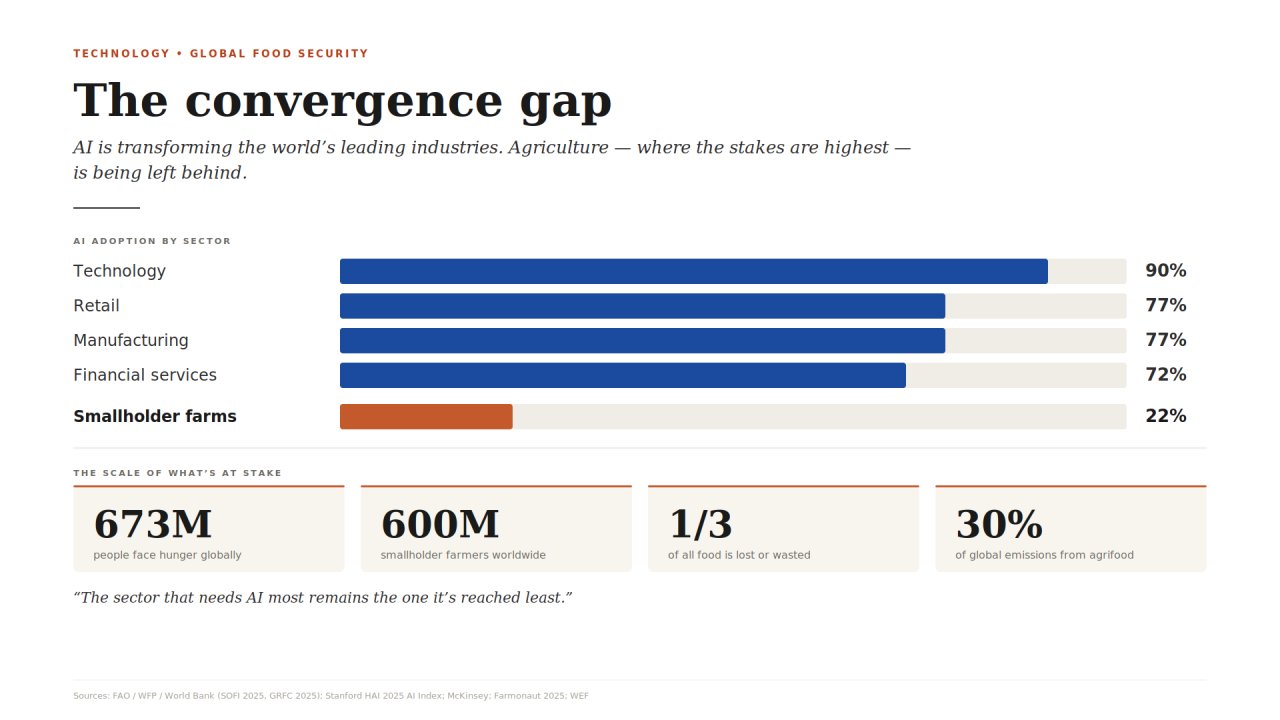
The Sector That Needs AI Most — and Knows It Least
Xiaochen Zhang looks at agriculture, the most exposed and most human of global industries, and the one where AI has made the least progress. He argues that closing this gap is the defining opportunity of the decade.
Read more → (opens in a new tab)
AI Is Rebuilding Healthcare From the Ground Up—Here’s What Comes Next
Xiaochen Zhang explains how AI is shifting healthcare from reactive medicine to predictive infrastructure. It can now detect disease before symptoms appear and read signals that were once invisible.
Read more → (opens in a new tab)
Why Fei-Fei Li Chose to Be the “Godmother of AI”—Even When She Didn’t Want To
Fei-Fei Li said she didn't want the title “Godmother of AI,” then accepted it so more women in AI would be seen. Xiaochen Zhang reflects on what that moment reveals about who gets recognized as a leader in AI.
Read more → (opens in a new tab)
From Windows to Intelligence: The Next Operating System Has No Interface
For four decades, people have adapted to computers through screens, menus and apps. Xiaochen Zhang argues the next operating system will be intelligence itself, defined by how well it understands intent and gets things done.
Read more → (opens in a new tab)
Three Projections From HumanX 2026: What Will Define The Next Phase Of AI
Ahead of HumanX 2026, Xiaochen Zhang shares three projections for the next phase of AI. The conversation is moving from exploration to execution, starting with AI adoption that shows measurable results.
Read more → (opens in a new tab)
The AI Loyalty Advantage: Why the Future of Artificial Intelligence Will Be Defined by Who It Serves
When a team cut a feature used by “only” 10,000 people, it overlooked the users who had helped improve the system. Xiaochen Zhang argues the AI economy must design for alignment with the people it serves, not just for scale.
Read more → (opens in a new tab)
From Financial Stress Tests to AI Stress Tests: Why Resilience Must Become a Core AI Strategy
Davos leaders described uncertainty as structural, not occasional. Xiaochen Zhang argues organizations should stress test their AI the way financial systems are stress tested, and make resilience a core part of AI strategy.
Read more → (opens in a new tab)
Beyond the Spirit of Dialogue: Why WEF 2027 Must Engineer the Fourth Pillar
As Davos 2026 closed on “A Spirit of Dialogue,” Xiaochen Zhang argues that conversation alone cannot fix a global order under structural strain. He calls on the 2027 agenda to move from talking about trust to engineering a Sovereign-Collaborative Future.
Read more → (opens in a new tab)
Beyond Automation: Nurturing Human Wisdom in the Age of AI
AI 2030 Head of Strategy Anastasia Raissis argues that as AI makes information instant, schools should focus on building judgment, ethical reasoning and empathy. AI, she writes, should strengthen human thinking rather than replace it.
Read more → (opens in a new tab)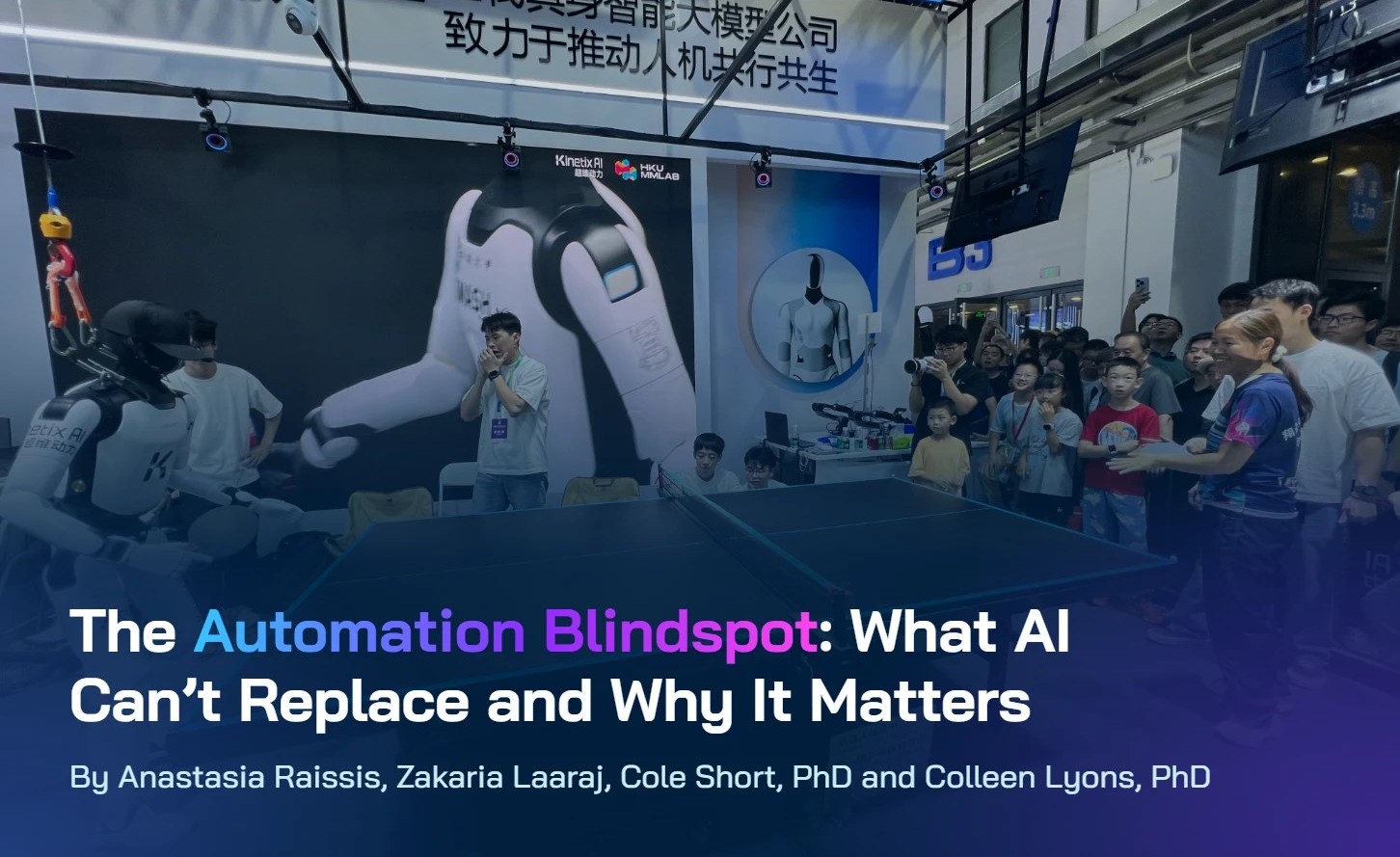
The Automation Blindspot: What AI Can't Replace and Why It Matters
Anastasia Raissis and fellow AI 2030 authors argue that judgment, ethical reasoning and empathy remain human strengths that must stay in charge of decisions. They call for redesigning work around human and AI collaboration, with real human oversight.
Read more → (opens in a new tab)
Surviving and Thriving: AI-Driven Innovation for Large Enterprises
Inspired by an ILO Institute roundtable in Chicago, Xiaochen Zhang looks at the art and science of innovation in large companies. Big organizations rarely fail at their core business, he writes, but by missing new trends, technologies and risks.
Read more → (opens in a new tab)
The End of 'Google It': Redefining Search in the AI Era
On January 1, 2025, Xiaochen Zhang compared Google with AI tools on everyday and work tasks. The AI platforms often gave more tailored, time-saving results, a sign of how search is changing.
Read more → (opens in a new tab)
4 Essential Steps for Central Banks to Adopt AI Responsibly
Drawing on years of work with central banks around the world, Xiaochen Zhang shares AI 2030's framework for adopting AI responsibly: four steps for using AI in policy and operations with care.
Read more → (opens in a new tab)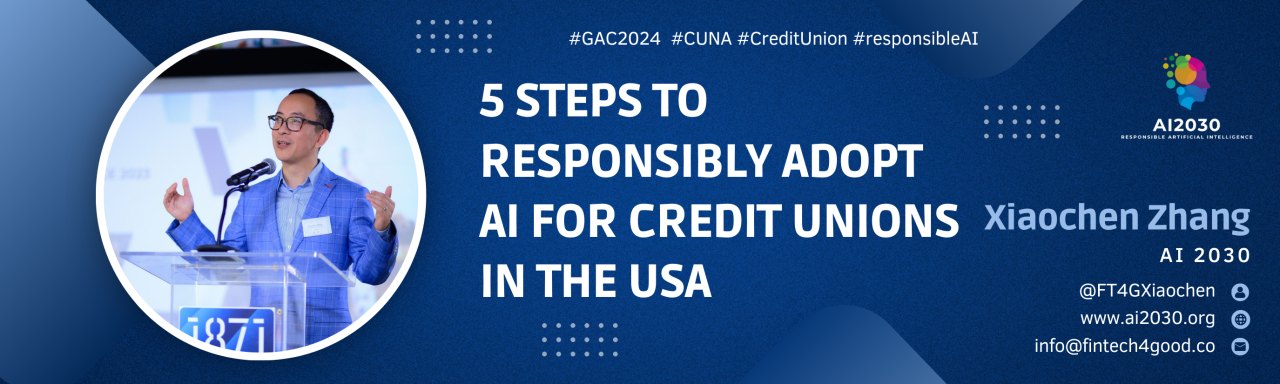
5 Steps to Responsibly Adopt AI for Credit Unions in the USA
Credit unions run on a cooperative model built around members and community, which shapes how they should use AI. Xiaochen Zhang lays out five steps, starting with leadership alignment and an AI governance structure.
Read more → (opens in a new tab)
Who Should Lead Responsible AI in Your Organization - Responsible AI Resource Center February 2024 Edition
The February 2024 edition of the Responsible AI Resource Center newsletter from AI 2030 and FinTech4Good. This month's topic: who should lead Responsible AI in your organization.
Read more → (opens in a new tab)
What to Expect in Responsible AI in 2024
Xiaochen Zhang explains why Responsible AI is moving from an emerging idea to the center of the global AI agenda. He points to deepfakes, rising AI incidents and new AI rules around the world.
Read more → (opens in a new tab)AI litigation review
The court cases shaping AI, explained for legal professionals and everyone else by Jerry Silber, AI Evangelist at AI 2030.
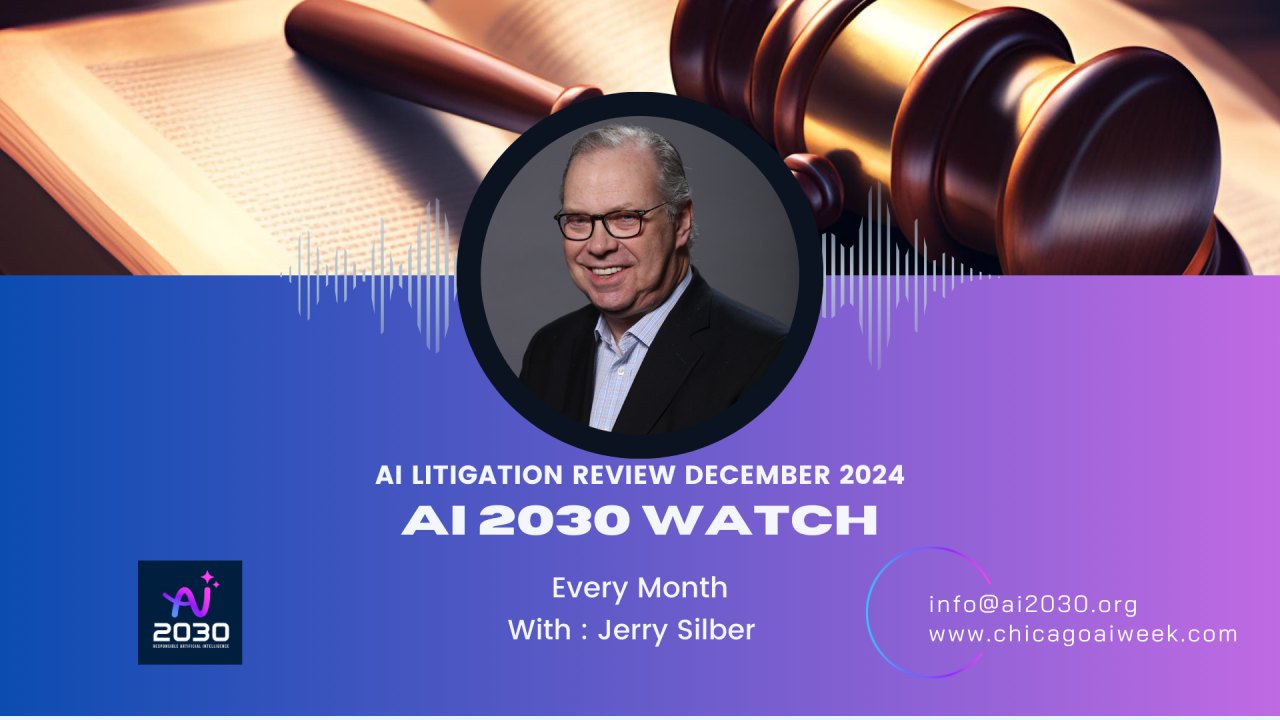
The Copyright Collision Course
Jerry Silber looks at two turning points for AI and copyright: the Raw Story Media v. OpenAI decision and the U.S. Copyright Office’s January 2025 guidance on AI-generated works.
Read more → (opens in a new tab)
A Peek at OpenAI’s Litigation Docket, or Who’s Buying the Next Round?
Jerry Silber reviews a busy few weeks for OpenAI’s legal team, starting with the copyright case brought by The New York Times and other publishers over training on their news content.
Read more → (opens in a new tab)
The Promise and Perils of AI in Healthcare
Jerry Silber examines what happens when human oversight is removed from AI in healthcare, and the harm elderly patients have faced as a result, while recognizing AI’s real benefits for care.
Read more → (opens in a new tab)
Monthly AI Litigation Review: Setting the Stage
The first AI 2030 Watch review sets the stage with the kinds of AI cases courts are grappling with, including the copyright suits news outlets have brought against Microsoft and OpenAI.
Read more → (opens in a new tab)Watch and listen
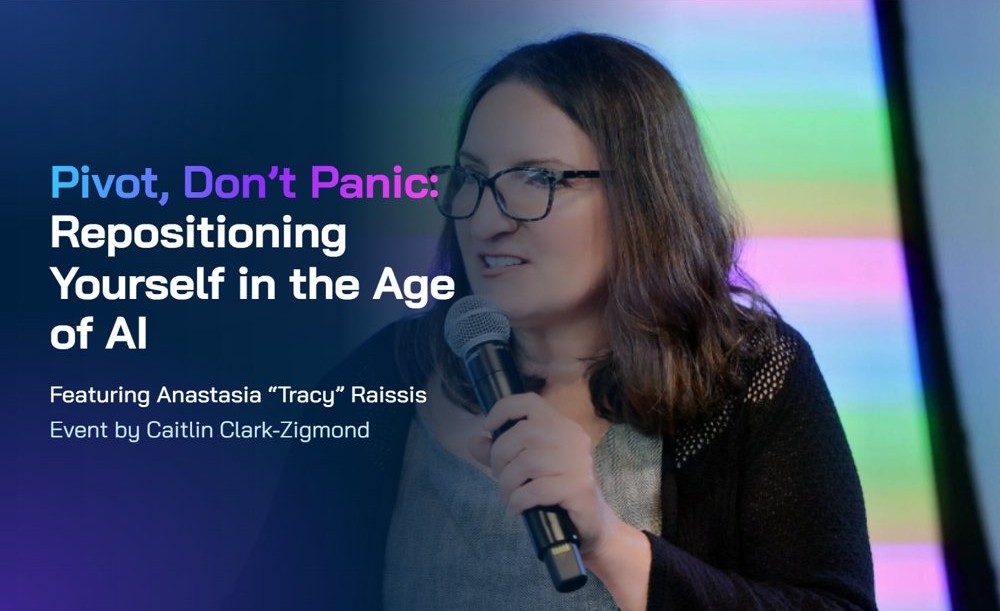
Pivot, Don’t Panic: Repositioning Yourself in the Age of AI
AI 2030 Head of Strategy Anastasia “Tracy” Raissis joins Caitlin Clark-Zigmond for a 30-minute LinkedIn session on how professionals can reposition themselves as AI changes their work.
Watch → (opens in a new tab)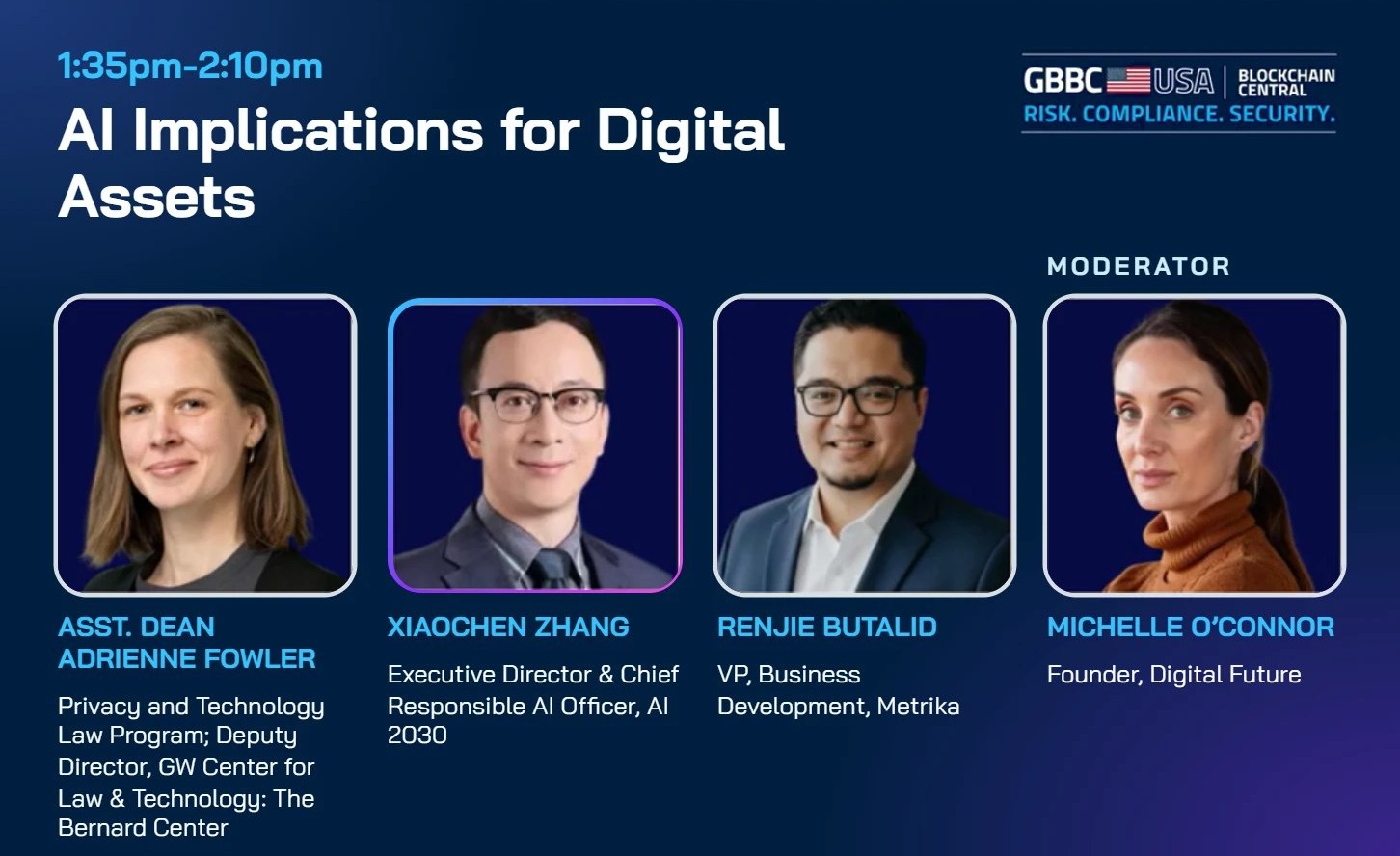
AI Implications for Digital Assets
Xiaochen Zhang joined a panel on AI and digital assets at GBBC's Blockchain Central event on risk, compliance and security in Washington, D.C. He spoke alongside Metrika's Renjie Butalid and Adrienne Fowler of the George Washington University Law School.
Watch → (opens in a new tab)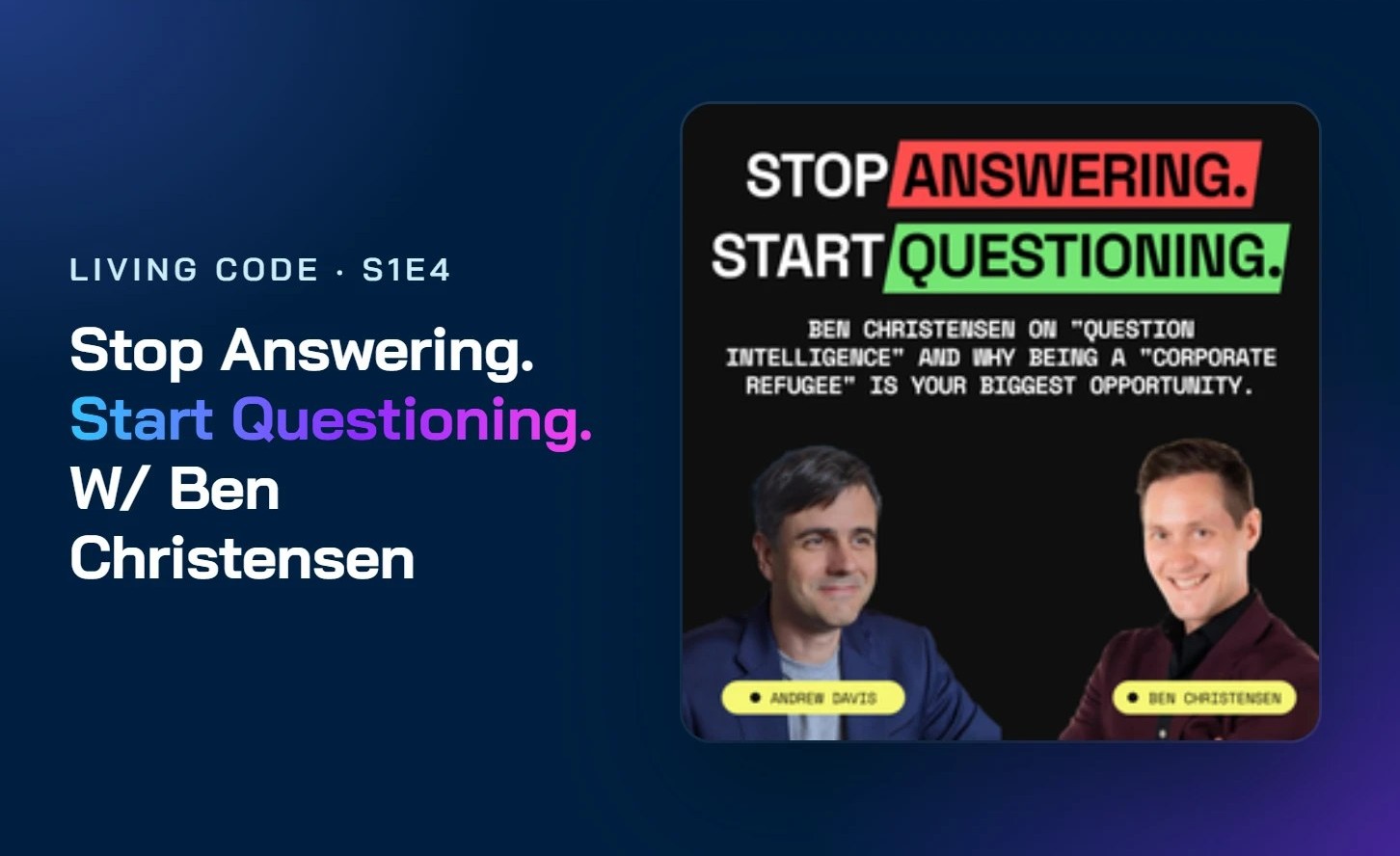
Stop Answering. Start Questioning. With Ben Christensen
AI 2030 Head of Partnerships Ben Christensen joins Living Code to talk about AI turning thinking skills into commodities. The conversation explores why the new edge is asking better questions, not finding answers.
Listen → (opens in a new tab)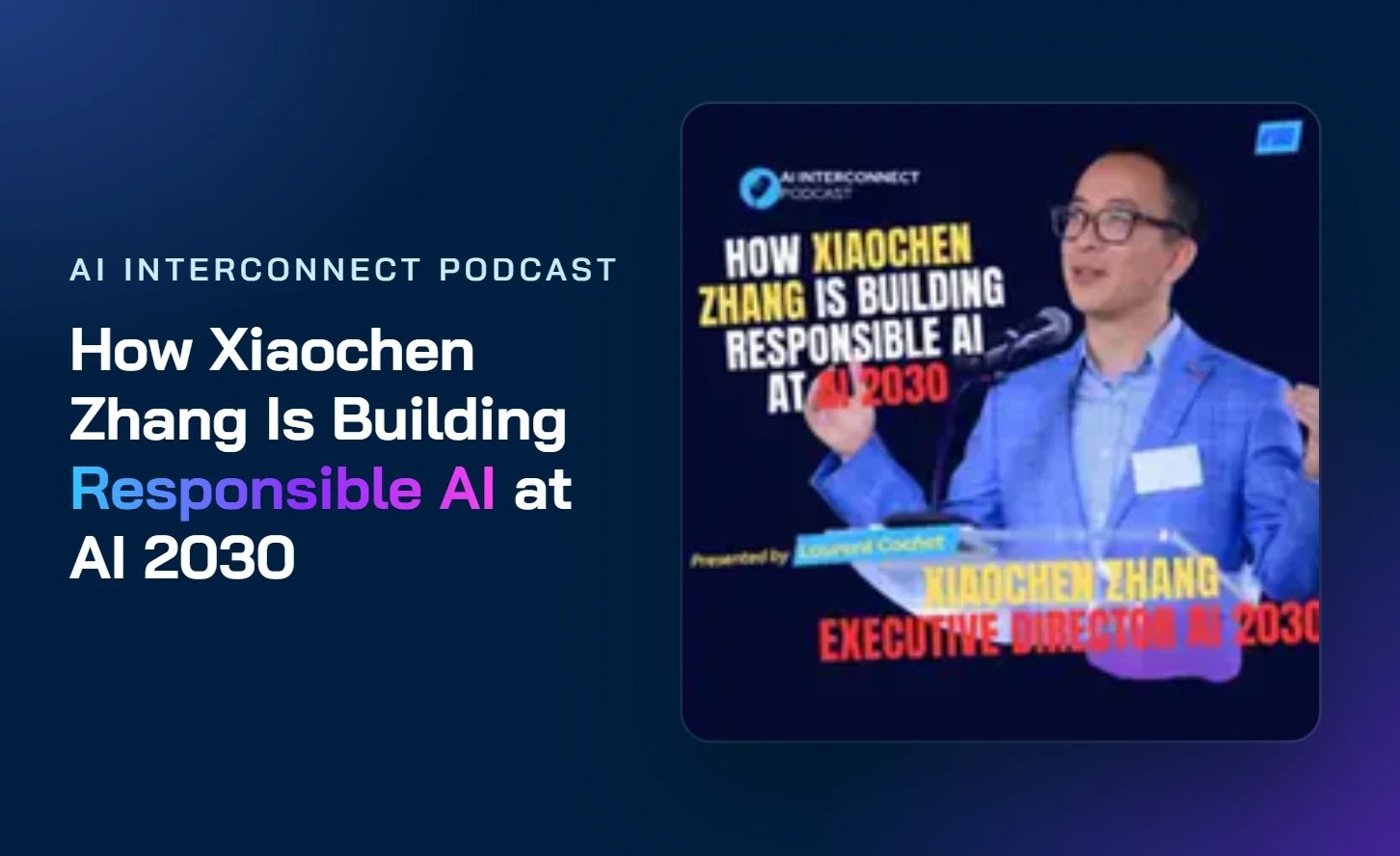
How Xiaochen Zhang Is Building Responsible AI at AI 2030
On the AI InterConnect Podcast, Xiaochen Zhang explains why leadership, not technology, is the biggest barrier to AI adoption. He makes the case for getting governance and trust right before scaling AI.
Listen → (opens in a new tab)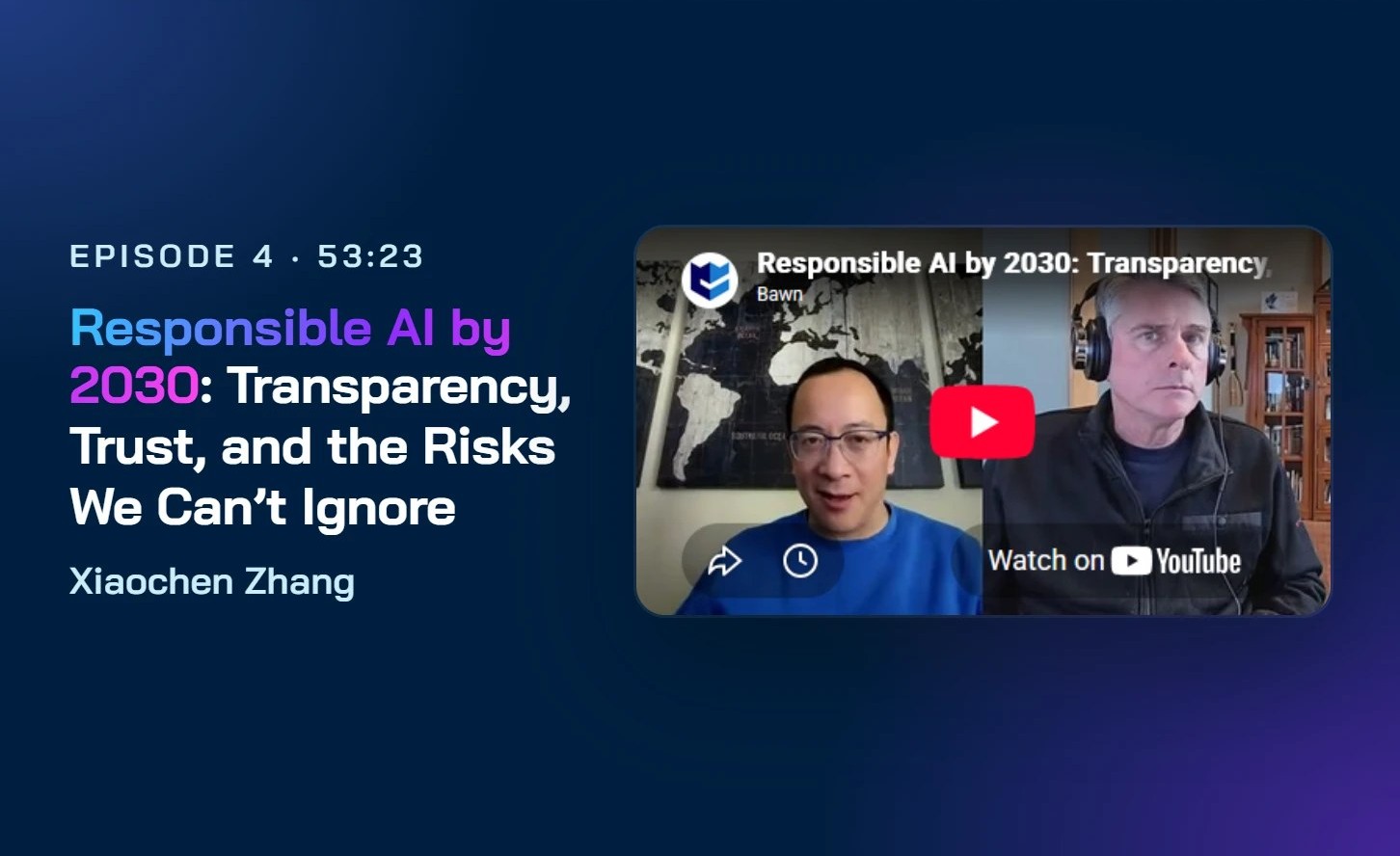
Responsible AI by 2030: Transparency, Trust, and the Risks We Can't Ignore
Xiaochen Zhang joins Bawn's Crushing It to discuss how bias, opacity and weak oversight creep into AI systems, and the energy cost of AI. He urges leaders to build in responsibility now without slowing innovation.
Listen → (opens in a new tab)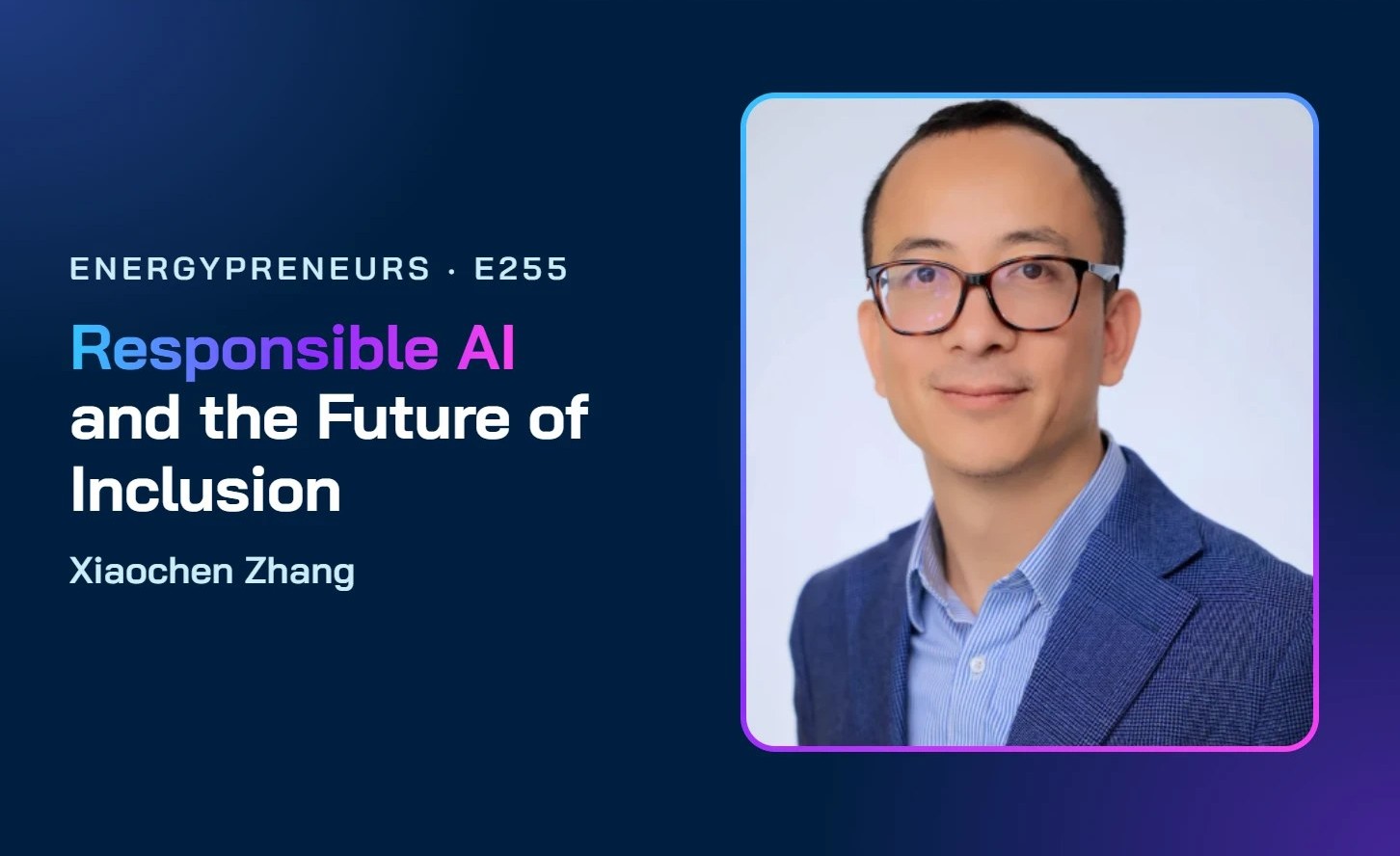
Responsible AI and the Future of Inclusion
Xiaochen Zhang shares his path from the World Bank to founding AI 2030, and a seven-principle framework for Responsible AI. The episode also covers the digital divide and AI's role in climate action and financial inclusion.
Listen → (opens in a new tab)
Innovative Work Models for the Future with Xiaochen Zhang
Xiaochen Zhang joins The Bliss Business Podcast to discuss how companies can rethink the way work is structured. The conversation argues that ethical oversight of AI, not productivity alone, will decide which businesses stay competitive.
Listen → (opens in a new tab)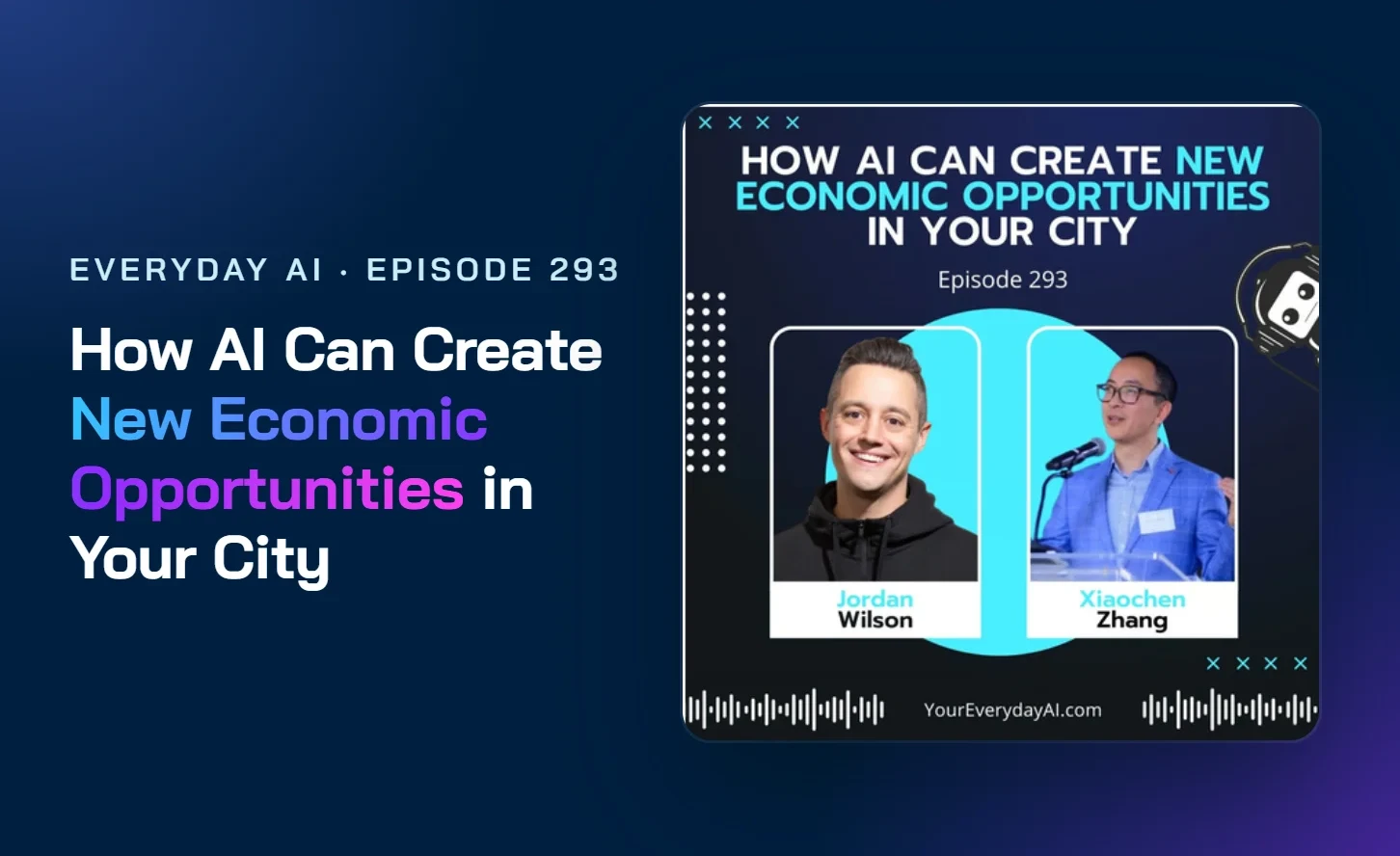
How AI Can Create New Economic Opportunities in Your City
On Everyday AI, Xiaochen Zhang explains how cities can use AI for local economic growth by thinking like startups. He points to go-to-market planning and public-private partnerships as places to start.
Listen → (opens in a new tab)